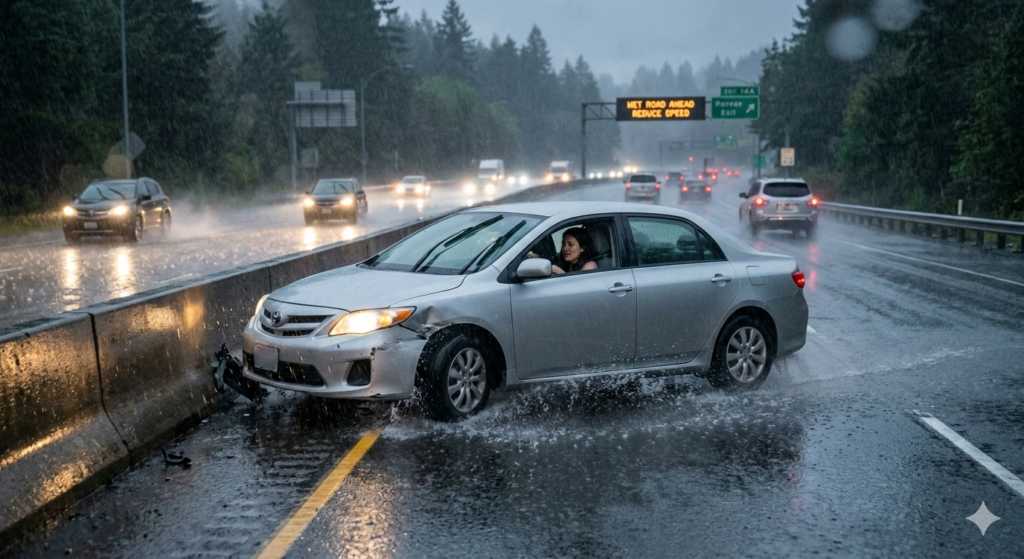
Houston drivers face often happen fast. One moment you are in control, and the next your car is sliding across the road. This is common during Houston spring storms. Roads can flood quickly, especially on highways like I-45, I-10, and the 610 Loop. As a result, many drivers lose traction and cannot stop in time. However, many people ask the same question after a crash:
Who is at fault?
This guide explains what causes hydroplaning, how fault is decided, and what steps to take after an accident.
What Is Hydroplaning and Why It Happens
Hydroplaning happens when your tires lose contact with the road. Instead of gripping the surface, your car slides on water.
For example, even a small amount of standing water can cause this problem. According to AAA’s wet weather driving guidance, speed and water depth both increase the risk.
As a result, drivers may:
Lose steering control
Drift into another lane
Hit other vehicles
Because of this, hydroplaning accidents can quickly become serious.
Why Hydroplaning Accidents Are Common in Houston
Houston weather creates the perfect conditions for hydroplaning.
Sudden Heavy Rain
Storms can appear quickly. In addition, rainfall can build up on roads before drivers have time to react.
Flood-Prone Roads
Some areas of Houston collect water faster than others. This is especially true near underpasses and low-lying roads.
Busy Highways
High traffic on I-45, I-10, Beltway 8, and Highway 99 increases the risk. When one car loses control, others may not have time to avoid a crash. Because of these factors, spring car accidents Houston drivers experience often involve hydroplaning.
Who Is at Fault in a Hydroplaning Accident?
This is the most important question, and the answer may surprise you.
Drivers Must Stay in Control
In Texas, drivers must control their vehicle at all times. This rule applies even in bad weather. According to Texas transportation laws, drivers must adjust to road conditions. That includes slowing down and keeping a safe distance.
Weather Is Not a Free Pass
However, many drivers believe rain excuses the crash. That is not always true.
For example:
Driving too fast in rain can lead to fault
Following too closely can lead to fault
Failing to adjust to conditions can lead to fault
Because of this, saying “the road was wet” does not remove responsibility.
Speed Plays a Big Role
Even if the speed limit is posted, drivers must go slower in rain. As a result, speed is often a key factor in hydroplaning cases.
Can Multiple Drivers Be Responsible?
Yes, in many cases more than one driver may share fault.
For example:
One driver hydroplanes
Another driver is following too closely
A third driver cannot stop in time
This can lead to a chain-reaction crash.
In addition, accidents involving trucks or company vehicles may involve multiple parties, including employers.
What to Do After a Hydroplaning Accident
- Get Medical Care: Even if you feel okay, symptoms may appear later. Medical records also help show your injuries.
- Document the Scene: If possible take photos of the road and water, capture vehicle damage and note weather conditions
- Be Careful With Insurance: Insurance companies may contact you quickly. However, avoid guessing or admitting fault.
- Learn Your Options: Because hydroplaning accidents can be complex, it may help to understand your legal options early.
You can also review how driving for work accident cases in Texas are handled if you were on the job at the time.
Do You Have a Case?
Not every accident leads to a claim. However, you may have a case if:
Another driver may have been careless
You suffered injuries
A truck or commercial vehicle was involved
The crash happened in heavy traffic or standing water
Each case depends on the facts. Because of this, a closer review is often needed.
What Your Case Could Be Worth
The value of a case depends on several factors, including:
Medical bills
Lost income
Injury severity
Some cases are smaller. Others may involve larger compensation.
However:
Results are not guaranteed
Every case is different
Past results do not predict future outcomes
Talk to a Houston Car Accident Lawyer
If you were injured in hydroplaning accidents Houston drivers often face, you may have questions about your next steps.
Attorney Don McClure handles personal injury cases as part of his practice area, including car accidents, truck crashes, and work-related driving injuries.
A consultation can help you understand:
Who may be at fault
What your options are
What steps to take next
Frequently Asked Questions About Hydroplaning Accidents Houston
Most frequent questions and answers
Hydroplaning happens when water builds up on the road and tires lose contact. Speed and wet roads increase the risk.
Not always. However, drivers must adjust to road conditions. In many cases, failing to slow down can lead to fault.
Yes, if another driver may have been careless. Each case depends on the specific facts.
Yes. Trucks need more distance to stop. As a result, wet roads increase the risk of serious crashes.
Seek medical care, document the scene, and avoid making statements about fault until you understand your situation.