What Evidence Should Be Preserved After an 18-Wheeler Accident?
After an 18-wheeler accident, the damage at the scene may be obvious, but much of the evidence that explains it may exist outside the crash scene.
Commercial trucks and trucking companies can generate records and electronic data that may help answer important questions about what happened before a collision. For example: How long had the driver been working? Was the truck properly maintained? Is there video of the crash? And what was happening with the truck right before impact?
Some of that information may be important when investigating responsibility for a serious truck accident. However, not every type of evidence is necessarily kept forever. So if you were injured in an 18-wheeler accident in Houston or elsewhere in Texas, here are the types of evidence that may become relevant.
1. Photos and Videos From the Accident Scene
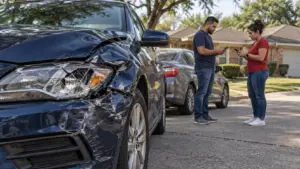
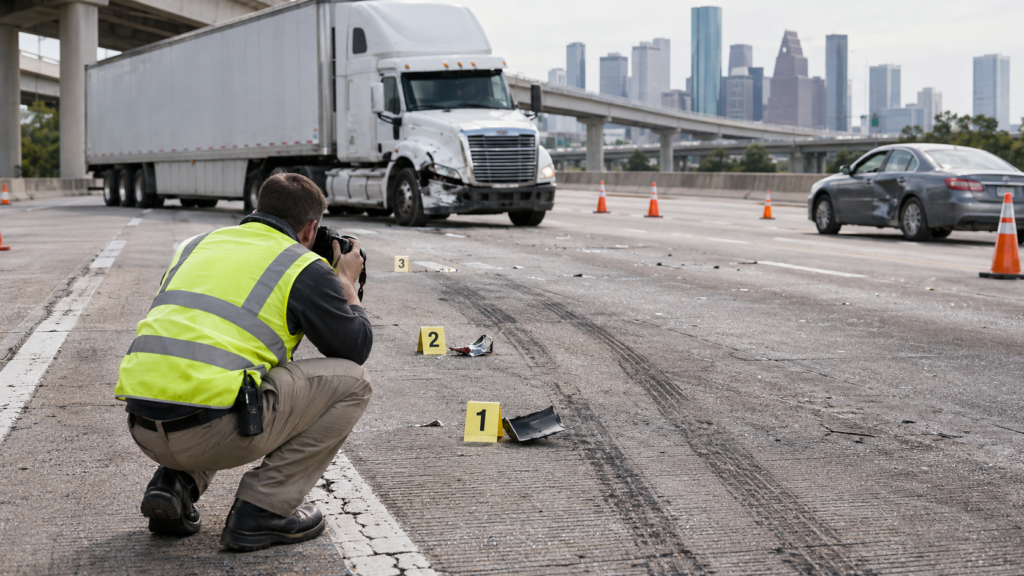
Some of the most useful evidence can be captured right after an 18-wheeler accident. Depending on the circumstances, and only if it is safe to do so, photos or video may document:
- Damage to both vehicles
- Where the vehicles ended up
- Skid marks or debris
- Road and weather conditions
- Traffic signs and signals
- Lane markings
- The truck, trailer, and identifying information
- Visible injuries
- Nearby businesses or cameras that may have captured the crash
Keep the original files. Also, don't worry about getting the "perfect" photo. Images that seem unimportant at first may provide useful context later.
2. Dashcam, Traffic, and Surveillance Video
A serious crash may have been captured by more than one camera. For instance, potential sources include dashcams, traffic cameras, security systems at nearby businesses, home cameras, or cameras installed on commercial vehicles.
Video can sometimes help answer questions that become disputed later, such as:
But video availability varies, because some systems routinely record over older footage. That is one reason identifying video evidence early after an 18-wheeler accident can be important.
3. Electronic Logging Device (ELD) Records
Many commercial drivers who must follow federal hours-of-service rules use electronic logging devices, called ELDs, to record their duty status. As a result, those records may help show when a driver was:
Why could that matter? Because driver hours, and whether the driver followed hours-of-service rules, may become relevant depending on how the accident happened.
Federal regulations generally require motor carriers to keep drivers' records of duty status and supporting documents for six months. That doesn't mean every truck accident involves an hours-of-service issue. Still, when those records are relevant, identifying them can be an important part of preserving evidence after an 18-wheeler accident.
4. Electronic Data From the Truck
People sometimes call this the truck's "black box." That term, however, can oversimplify what is actually available.
Depending on the vehicle and its systems, commercial trucks may generate different types of electronic information. In turn, that data may help investigators understand how the truck was operating around the time of a crash.
What information exists, where it is stored, and whether it can be retrieved all depend on the specific truck and equipment involved. That is why the specific vehicle should be identified as part of the investigation, instead of assuming every commercial truck stores the same information.
5. Driver Records
The driver may also have records relevant to the investigation. Depending on the circumstances, these could include information about:
- Driver qualifications
- Commercial driver's license status
- Training
- Employment history
- Driving history
- Hours-of-service records
- Prior safety issues relevant to the case
Having a record doesn't automatically prove negligence. Instead, the question is whether the information is relevant to what happened in that particular collision.
6. Inspection and Maintenance Records
Sometimes the investigation isn't only about the driver's actions, because the condition of the truck itself may matter too.
Maintenance and inspection records can provide information about the truck's condition and whether known mechanical issues were fixed. Depending on the crash, investigators may look at brakes, tires, lights, steering, or other equipment.
Again, this doesn't mean a mechanical problem caused every truck accident. It means that when the truck's condition may have contributed to a crash, maintenance and inspection records can become important evidence after an 18-wheeler accident.
7. Dispatch, Trip, and Supporting Records
Trucking companies generate paperwork and electronic records as part of everyday business. Depending on the carrier and type of operation, relevant information may include:
- Dispatch records
- Trip records
- Schedules
- Bills of lading
- Itineraries
- Electronic fleet messages
- Certain expense records
- Payroll or settlement records
Some of these documents can also be used to support or check a driver's record of duty status. Taken together, records from different sources may help build a timeline of what was happening before the collision.
8. Cellphone and Communication Evidence
Distracted driving can be an issue in both car and truck accidents. So when they are legally obtainable and relevant, cellphone or communication records may help show whether communications happened around the time of a collision.
In addition, commercial fleets may use electronic messaging or fleet-management systems to talk with drivers. Whether those records matter depends on the facts of the accident.
9. Witness Information
Physical and electronic evidence matter after an 18-wheeler accident, but witnesses can be important too. For example, someone nearby may have seen the truck speeding, changing lanes, running a light, or acting differently right before the collision.
If you got names or contact information from witnesses, keep it. As time passes, witnesses can become harder to find, and memories can fade.
10. The Police Crash Report
The responding law enforcement agency may prepare a crash report that documents what it found after the collision. Keep a copy when it becomes available.
But remember that a crash report is not necessarily the only evidence that matters after an 18-wheeler accident. A truck accident investigation may also involve video, electronic data, physical evidence, witnesses, trucking records, and other information the officer didn't have at the scene.
11. Your Medical Records and Bills
Evidence isn't limited to how the accident happened. In fact, a personal injury claim also involves documenting what happened to you because of the collision. That may include:
- Emergency room records
- Diagnostic imaging
- Doctor's records
- Physical therapy records
- Prescription information
- Medical bills
- Follow-up treatment
- Proof of work you missed
Keep your accident-related documents organized, rather than relying on memory months later.
Your evidence checklist: what you can keep yourself
Why Acting Early Matters for Evidence After an 18-Wheeler Accident
This is where truck accident cases can become especially time-sensitive, because different records can have different retention periods.
For example, the Federal Motor Carrier Safety Administration states that motor carriers generally must keep ELD records of duty status and supporting documents for six months. Federal rules also require motor carriers to keep an accident register of qualifying crashes for three years. Those are two different types of records with two different retention rules.
Meanwhile, video from a private camera may run on an entirely different schedule and could be recorded over much sooner. The takeaway isn't that evidence automatically disappears right after every accident. Rather, you shouldn't assume every relevant record will still be available months or years later.
What Is a Preservation Letter?
Depending on the circumstances, an attorney may send written notice asking a person or business to preserve specific evidence that could be relevant to a potential legal claim.
- Electronic data from the truck
- Driver records and ELD logs
- Video from the truck and the company
- Inspection and maintenance records
- Dispatch messages and communications
- Other documents tied to the trip
Exactly what should be requested depends on the accident. After all, a generic request for "everything" isn't a substitute for identifying the evidence that may actually matter.
What If the Trucking Company Says Its Driver Wasn't Responsible?
That's exactly when evidence from the 18-wheeler accident can become especially important. The trucking company's insurer may have one version of the collision, while you may have another.
So instead of relying only on competing stories, physical, electronic, written, and witness evidence may help show what happened.
Related: The Insurance Company Says the Truck Driver Wasn't at Fault. What Now?
How Long Do You Have After a Truck Accident in Texas?
Texas generally sets a two-year deadline for many personal injury lawsuits, although exceptions and different deadlines can apply depending on the circumstances.
The deadline to file a lawsuit and the window for preserving evidence are not the same thing. Waiting just because you think you have two years could make an investigation harder if relevant evidence is no longer available.
FAQs: Evidence After an 18-Wheeler Accident
What is the most important evidence after an 18-wheeler accident?
There isn't one piece of evidence that matters in every case. Instead, depending on the collision, important evidence could include video, photos, witnesses, electronic truck data, driver logs, maintenance records, physical evidence, or other records.
Do 18-wheelers have black boxes?
Commercial trucks can have electronic systems that generate or store vehicle information. However, the type of data available varies by truck and equipment. So while "black box" is a handy term, you shouldn't assume every truck records the same information.
Can trucking companies delete driver logs?
Federal regulations set record-keeping rules for certain motor carriers. For example, FMCSA states that ELD records of duty status and supporting documents generally must be kept for six months. Still, the rules and records that apply depend on the carrier and driver.
Can nearby businesses have video of a truck accident?
Possibly. Security cameras at businesses and homes, dashcams, or other sources may have captured the collision. Whether footage exists, and how long it is kept, depends on the specific recording system.
Should I keep photos even if the insurance company already has them?
Yes. Keep your own original photos, videos, letters, and other accident records, rather than assuming another party will keep copies for you.
Can an attorney get trucking company records?
Depending on the circumstances and the stage of a claim or lawsuit, an attorney may seek relevant evidence from the trucking company and other sources through available legal processes. Even so, what records can be obtained depends on the particular case.
After a Truck Accident, the Investigation Matters
An 18-wheeler accident isn't always just a question of what two drivers remember. There may also be video, electronic data, driver records, company records, maintenance information, witnesses, and physical evidence that help give a more complete picture. And some of that information may not stay available forever.
At the Law Office of Don E. McClure, we handle personal injury cases involving commercial vehicles and serious accidents in Houston and throughout Texas. So if you were injured in an 18-wheeler or commercial truck accident, contact our team to talk about what happened and learn about your options.
Sources
- Six-month record keeping: FMCSA, How long must motor carriers retain RODS and supporting documents?
- What counts as a supporting document: FMCSA, Supporting Documents
- Three-year accident register: 49 CFR 390.15
- Two-year lawsuit deadline: Texas Civil Practice and Remedies Code § 16.003
This article is for general informational purposes only and does not constitute legal advice. Reading this article or contacting the office does not create an attorney-client relationship. Every case is different, and past results do not guarantee future outcomes. Not certified by the Texas Board of Legal Specialization.