Container Truck Accidents in La Porte: Why the Investigation May Involve More Than the Driver
Container truck accidents in La Porte may involve more than the person behind the wheel. The cab, the frame under the cargo box, and the box itself may belong to different companies.
That does not mean every company is at fault. It means the equipment and records may need a closer look.
I’m Don McClure, a Houston truck accident attorney serving La Porte and nearby communities. Here is a simple explanation of the equipment, the records, and why company names alone do not establish legal responsibility.
Quick Answer: Why Might Other Companies Be Involved?
A container truck has several parts. Different businesses may supply, use, inspect, or repair those parts.
Federal safety rules describe duties for equipment providers, trucking companies, and drivers. However, having a safety duty does not automatically make a business responsible for an accident. What happened—and whether it caused harm—still matters. [1] [8]
Three Parts: Tractor, Chassis, and Container
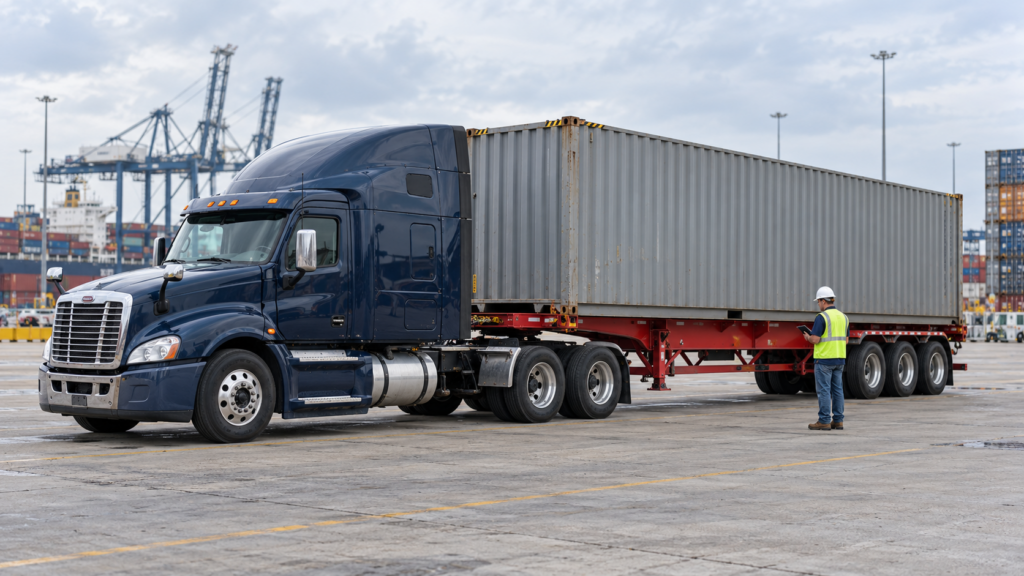
A container truck may look like one vehicle. Its main parts have different jobs.
- Tractor: The powered vehicle with the cab and engine. This is where the driver sits.
- Chassis: The wheeled frame under the container. It supports the cargo box and includes parts such as tires, brakes, and locks.
- Container: The removable box that holds the cargo. It can move between a ship, train, and truck.
The chassis and container are separate pieces of equipment. In FMCSA’s intermodal rules, the term “intermodal equipment” mainly refers to chassis and certain trailers used to carry containers on public highways in interstate commerce. [2]
Are the Truck, Chassis, and Container Always Owned by the Same Company?
No. Different companies may own or supply each part.
For example, a trucking company may use the tractor, an equipment provider may supply the chassis, and another business may own the container.
Ownership also differs from maintenance. A business may arrange for a separate repair shop to work on the equipment.
| Part | Records that may help explain its role |
|---|---|
| Tractor | Vehicle number, ownership records, lease papers, and service records. |
| Chassis | Equipment number, provider information, inspection reports, and repair records. |
| Container | Container number, shipment papers, and loading records. |
A company name helps identify who may have information. It does not prove that the company caused the crash.
What Is an Intermodal Equipment Provider?
An intermodal equipment provider, or IEP, is a person or business that supplies intermodal equipment to a trucking company under a written interchange agreement, or has a contract to maintain that equipment. [2]
For container trucks, this role often involves the chassis.
FMCSA describes duties for these providers, including inspections, maintenance, repairs, and records. Providers can hire other businesses to perform the work. [1] [3]
The equipment provider is not always the driver’s employer or the owner of the container.
Does the Driver Also Have Safety Duties?
Yes. Drivers have their own inspection duties.
FMCSA describes checks of visible parts such as tires, lights, brake connections, and locking parts. [4]
These checks differ from a detailed inspection at a repair shop. Also, federal rules do not require a written pre-trip inspection report. Therefore, a missing pre-trip form does not automatically mean the driver skipped the inspection. [4]
Which Inspection and Maintenance Records May Matter?
For container truck accidents in La Porte, the useful records depend on what may have gone wrong.
Equipment numbers
These help connect the records to the exact tractor, chassis, or container involved.
A repair record for another chassis does not explain the condition of the chassis in the crash.
Inspection and service records
These may show when equipment was checked, what was found, and what work was completed. Federal rules set inspection, maintenance, and record duties for covered equipment. [5] [7]
A past inspection does not prove that the equipment stayed in the same condition afterward.
Reports of equipment problems
Drivers may report problems such as damaged tires, faulty lights, or brake issues. Federal rules require reports of known equipment problems covered by the rule when intermodal equipment is returned. [6]
A report may help explain what was known about the equipment. Repair records may show how the problem was handled.
Equipment handoff records
These may show when a chassis changed hands and which business used it at a particular time.
Loading and shipment records
If cargo movement may have played a part, these records may help explain how the container was loaded or handled.
No single record answers every question. Records, photos, and the equipment itself may need to be considered together.
Why the Cause of the Crash Matters
Different crashes raise different questions.
- A rear-end crash: The review may involve the driver’s actions and the brakes.
- A container that moves: The review may involve the locks, the way the box was secured, and any damage.
- A tire failure: The review may involve the tire’s condition and repair history.
These are examples of possible questions. They do not show that a particular person or company was at fault.
Does Identifying a Company Automatically Establish Liability?
No. Being connected to the equipment does not automatically make a company legally responsible.
For a typical negligence claim, the questions include:
- Did the person or company have a legal duty?
- Did they fail to meet that duty?
- Did that failure cause harm?
These are general parts of a negligence claim. Other types of claims may have different requirements. [8]
A company may own equipment without causing the accident. A reported defect may also be unrelated to the collision.
FMCSA’s safety rules explain responsibilities. They do not automatically decide who must pay an injury claim.
Why Equipment and Records Can Matter After a Crash
Equipment can move between locations and return to use. Repairs may also change its condition.
Records and photos may help explain what the equipment looked like, who used it, and what work was done.
For container truck accidents in La Porte, that history may help explain whether the crash involved driving, equipment, maintenance, or a combination of factors.
How Truck Accident Attorney Don McClure Can Help
When I review a container truck injury claim, the questions may go beyond who was driving.
Depending on the facts, a review may include the equipment involved, the records available, and the roles of different businesses.
Sometimes the evidence centers on the driver. In other cases, a possible equipment problem needs a closer look. The facts determine which questions matter.
Related reading: Oil and gas truck accidents on Texas highways .
FAQs About Container Truck Accidents in La Porte
Are the truck, chassis, and container always owned by the same company?
No. Different businesses may own, lease, supply, or maintain them. Their roles depend on the equipment and agreements involved.
What is an intermodal equipment provider?
An IEP supplies intermodal equipment under a written interchange agreement or has a contract to maintain it. For container trucks, this often concerns the chassis. [2]
Which inspection and maintenance records may matter?
Equipment numbers, inspection reports, repair histories, problem reports, and equipment handoff records may help explain what happened. The useful records depend on the crash.
Does identifying a company automatically establish liability?
No. A name on the equipment does not prove fault. Legal responsibility depends on the company’s role, its actions, and whether those actions caused harm.
Questions About a Container Truck Injury Claim?
I’m Don McClure, a Houston truck accident attorney serving La Porte and nearby communities.
My office can discuss a possible injury claim and explain whether it is a matter the firm can handle.
Serving La Porte and Nearby Communities
Truck Accident Attorney Don McClure serves people in La Porte, Pasadena, Deer Park, South Houston, Houston, and nearby communities. The firm also serves Katy.
Practice areas include car wrecks, commercial vehicle accidents, and work-site injuries caused by third parties.
Primary practice location: Houston, Texas.
Sources
- FMCSA: Intermodal equipment providers and shared safety duties .
- FMCSA: Definitions of intermodal equipment and providers .
- FMCSA: Hiring others for inspections, repairs, and maintenance .
- FMCSA: Driver inspection duties .
- 49 CFR 396.3: Inspection, repair, and maintenance .
- 49 CFR 396.11: Equipment problem reports and repairs .
- 49 CFR 396.17: Periodic inspections .
- Supreme Court of Texas: Elephant Insurance Co. v. Kenyon , explaining the general elements of negligence.