
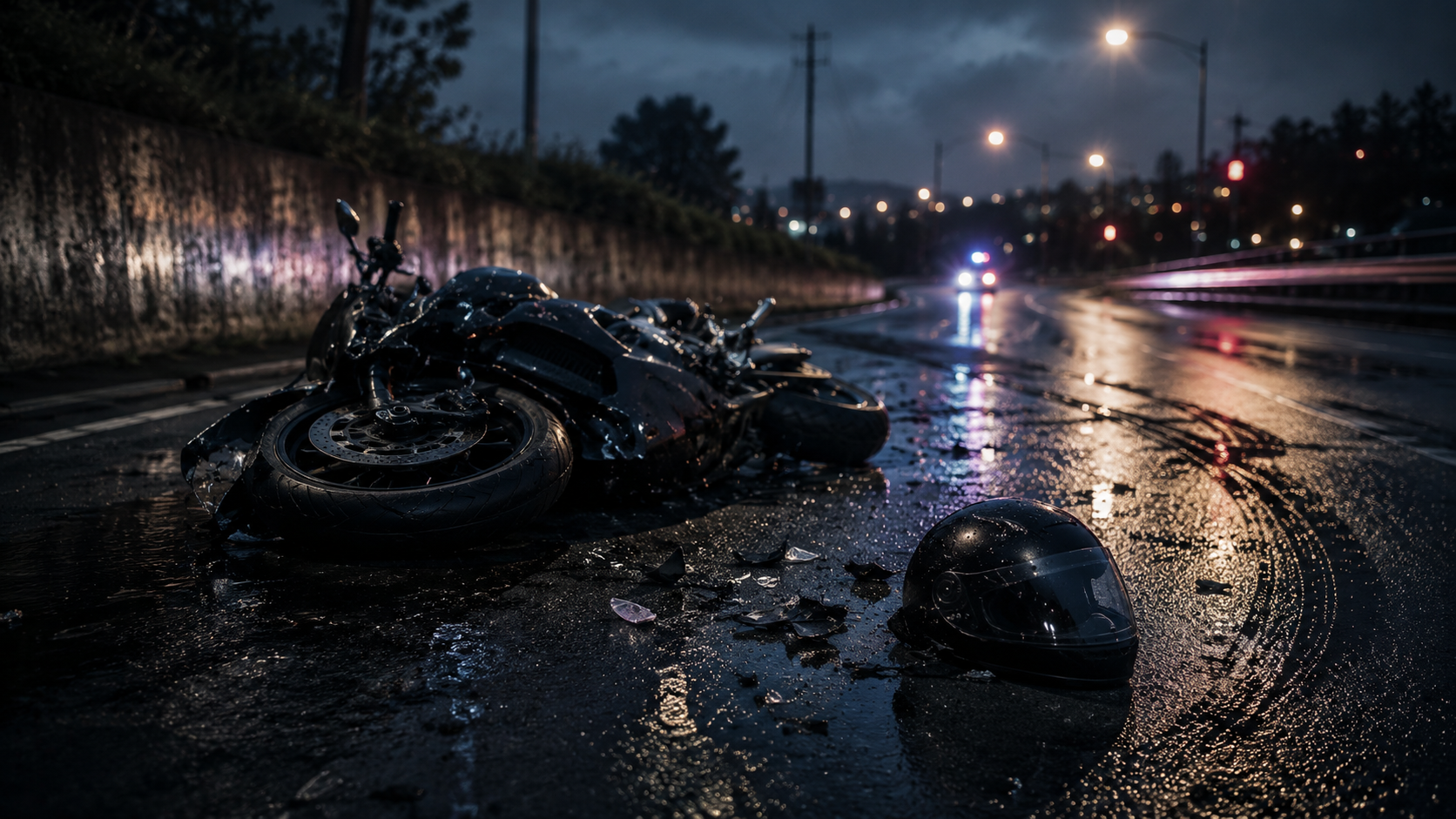
Questions About Motorcycle Accidents
These motorcycle accident FAQs can help injured riders, passengers, and families understand medical care, evidence, driver fault, insurance issues, helmet questions, deadlines, and next steps after a crash in Texas.
Common Questions About Motorcycle Accidents in Texas
Use this FAQ as a starting point. These answers are general information, not legal advice, and the right next step can depend on the crash facts, injuries, available evidence, insurance coverage, fault issues, deadlines, and Texas law.
01-05
First Steps After a Motorcycle Accident
01What should I do after a motorcycle accident in Texas?
Call 911, check for injuries, and get medical care right away. If you can do so safely, take photos of the crash scene, motorcycle, other vehicles, road conditions, skid marks, traffic signs, visible injuries, and insurance information. You should also get witness names and avoid admitting fault.
02Should I call the police after a motorcycle accident?
Yes. A police report can help document the crash, identify the drivers involved, list insurance information, and preserve important facts. This is especially important if you were injured or the other driver is blaming you.
03Should I go to the doctor after a motorcycle crash?
Yes. Motorcycle crashes often cause serious injuries, and symptoms may not appear right away. A medical evaluation helps protect your health and creates a record connecting your injuries to the accident.
04What information should I collect after a motorcycle accident?
Try to collect the other driver’s name, phone number, insurance information, license plate number, driver’s license information, witness names, police report number, photos, videos, and medical records.
05What photos should I take after a motorcycle accident?
Take photos of your motorcycle, other vehicles, license plates, vehicle damage, road debris, skid marks, lane markings, traffic lights, stop signs, weather conditions, your helmet, riding gear, and visible injuries.
06-10
Responsibility, Fault, and Case Differences
06Why are motorcycle accident cases different from car accident cases?
Motorcycle accident cases are different because riders have less protection, injuries are often more serious, and insurance companies may unfairly blame the motorcyclist. These cases often require strong evidence to show what really happened.
07Can I sue after a motorcycle accident in Texas?
Possibly. If another driver, company, property owner, government entity, or defective product caused or contributed to the crash, you may have a personal injury claim.
08Who can be responsible for a motorcycle accident?
Possible responsible parties may include another driver, commercial vehicle company, trucking company, delivery company, motorcycle manufacturer, parts manufacturer, road contractor, property owner, or government entity.
09What are common causes of motorcycle accidents?
Common causes include distracted driving, speeding, failure to yield, unsafe lane changes, drunk driving, following too closely, left-turn crashes, poor road conditions, defective parts, and drivers failing to see motorcycles.
10What if the driver says they did not see my motorcycle?
Drivers still have a duty to watch for motorcycles. “I did not see them” does not automatically excuse careless driving. A full investigation can look at visibility, traffic signals, witness statements, vehicle position, and driver behavior.
11-23
Common Motorcycle Crash Causes
11What if a driver turned left in front of my motorcycle?
Left-turn crashes are common and often serious. A driver may be responsible if they failed to yield, misjudged your speed, turned without looking, or violated traffic laws.
12What if a driver changed lanes into my motorcycle?
A driver may be responsible for failing to check blind spots, signal properly, maintain a safe lookout, or yield before changing lanes. Photos, witness statements, dash camera footage, and vehicle damage can help prove what happened.
13What if I was hit by a distracted driver while riding a motorcycle?
Distracted driving may involve texting, phone use, GPS, eating, grooming, or other distractions. Cell phone records, witness statements, dash camera footage, and vehicle data may help prove distraction.
14What if I was hit by a drunk driver on my motorcycle?
A drunk driving motorcycle crash may support a personal injury claim. Evidence may include the police report, arrest records, blood alcohol testing, witness statements, and crash evidence.
15What if I was hit by a speeding driver?
Speeding can increase the severity of a motorcycle crash. Speed may be proven through witness statements, police reports, dash camera footage, traffic cameras, skid marks, and crash reconstruction.
16What if a commercial vehicle caused my motorcycle accident?
Commercial vehicle crashes may involve both the driver and the company. The company may be responsible for unsafe hiring, poor training, bad maintenance, distracted driving, unsafe scheduling, or allowing unsafe driving.
17Can I bring a claim after being hit by an 18-wheeler while riding a motorcycle?
Possibly. Motorcycle crashes involving 18-wheelers can be catastrophic and may involve the truck driver, trucking company, trailer owner, cargo company, maintenance provider, or another responsible party.
18Can I bring a claim after being hit by a delivery truck on my motorcycle?
Yes, depending on the facts. Delivery truck cases may involve a driver, delivery company, contractor, vehicle owner, insurance carrier, or app-based delivery company.
19What if poor road conditions caused my motorcycle crash?
Poor road conditions can be especially dangerous for motorcyclists. Potholes, loose gravel, uneven pavement, missing signs, construction debris, slick surfaces, and unsafe traffic control may support a claim, depending on who was responsible.
20Can I sue a city or government entity for a dangerous road motorcycle accident?
Possibly, but these cases can involve special notice rules and shorter deadlines. If a dangerous road condition contributed to your motorcycle crash, you should speak with an attorney quickly.
21What if a defective motorcycle part caused the crash?
If a defective tire, brake system, throttle, steering component, helmet, or other part caused or worsened the crash, a product liability claim may be possible.
22What if my motorcycle tire failed before the accident?
A tire failure may involve a defective tire, poor maintenance, improper installation, road debris, or another cause. The motorcycle and tire should be preserved if possible.
23What if my motorcycle brakes failed?
Brake failure may point to defective parts, negligent repair, poor maintenance, or improper installation. Repair records, inspection records, and the motorcycle itself may be important evidence.
24-27
Lane Splitting, Helmets, and Protective Gear
24What if I was lane splitting when the accident happened?
Texas does not clearly authorize lane splitting the way some riders may understand it. Fault will depend on the facts, including traffic conditions, driver behavior, speed, visibility, and whether others also acted negligently.
25What if I was not wearing a helmet?
You may still have a claim. Not wearing a helmet does not automatically mean you caused the crash. However, the insurance company may try to argue that helmet use affected the severity of certain injuries.
26Does Texas require motorcycle riders to wear helmets?
Texas law generally requires motorcycle helmets, but there are exceptions for certain riders who are 21 or older and meet legal requirements. Even when a rider was not required to wear a helmet, insurance companies may still try to use helmet issues against them.
27Can I recover compensation if I was not wearing protective gear?
Possibly. Lack of protective gear does not automatically prevent recovery. The key questions include who caused the crash, what injuries were caused by the collision, and whether any gear issue actually affected the injuries claimed.
28-36
Motorcycle Accident Injuries
28What injuries are common after a motorcycle accident?
Common injuries include road rash, broken bones, traumatic brain injuries, spinal cord injuries, neck injuries, back injuries, internal injuries, burns, amputations, facial injuries, nerve damage, scarring, and emotional trauma.
29Can I bring a claim for road rash after a motorcycle crash?
Yes, depending on the facts. Road rash can be serious and may involve infection, nerve damage, scarring, skin grafts, and long-term pain.
30Can I bring a claim for a traumatic brain injury after a motorcycle accident?
Possibly. A traumatic brain injury can happen even if you were wearing a helmet and even if you did not lose consciousness. Symptoms may include headaches, dizziness, confusion, memory problems, mood changes, nausea, and trouble concentrating.
31Can I bring a claim for broken bones after a motorcycle accident?
Yes, if another person or company caused the crash. Broken bones may require surgery, hardware, therapy, time away from work, and long-term medical care.
32Can I bring a claim for a spinal cord injury after a motorcycle crash?
Possibly. Spinal cord injuries can cause paralysis, weakness, numbness, chronic pain, mobility problems, and permanent disability. These cases require careful medical and financial evaluation.
33Can I bring a claim for scarring or disfigurement after a motorcycle accident?
Possibly. Motorcycle crashes can cause scars from road rash, burns, surgery, glass, metal, or impact injuries. Scarring and disfigurement may be part of the damages in a personal injury claim.
34Can I bring a claim for PTSD after a motorcycle accident?
Possibly. Serious motorcycle crashes can cause anxiety, nightmares, fear of riding, depression, sleep problems, and post-traumatic stress. These damages should be documented with medical or mental health evidence when possible.
35What if my motorcycle accident symptoms showed up days later?
Delayed symptoms are common. Get medical care as soon as symptoms appear and tell your doctor you were involved in a motorcycle accident. Waiting too long may give the insurance company an excuse to question your claim.
36What if I had a pre-existing condition before the motorcycle accident?
A pre-existing condition does not automatically prevent a claim. If the crash made an old injury worse or caused new symptoms, you may still have legal rights.
37-40
Damages, Lost Wages, and Motorcycle Damage
37What damages can I recover after a motorcycle accident in Texas?
Depending on the case, damages may include medical bills, future medical care, lost wages, loss of earning capacity, pain, mental anguish, physical impairment, disfigurement, motorcycle damage, and other legally recoverable losses.
38Can I recover lost wages after a motorcycle accident?
Possibly. If your injuries caused you to miss work, lose overtime, reduce your hours, or lose income, those losses may be part of your claim. Pay stubs, tax records, employer letters, and medical restrictions can help prove lost wages.
39Can I recover future medical expenses after a motorcycle crash?
Possibly. Serious injuries may require surgery, therapy, medication, injections, rehabilitation, prosthetics, counseling, or long-term care. Future medical expenses usually require medical support and documentation.
40Can I recover for damage to my motorcycle?
Yes, if another person or company caused the crash. Property damage may include repairs, replacement value, towing, storage, custom parts, riding gear, helmet damage, and related losses.
41-46
Insurance, Fault, Settlements, and Case Value
41What if the other driver was uninsured?
You may have options through your own uninsured motorist coverage if you purchased it. A lawyer can review your policy and explain whether coverage may apply.
42What if the other driver did not have enough insurance?
You may have an underinsured motorist claim through your own policy if your damages exceed the at-fault driver’s insurance limits and you purchased that coverage.
43What are Texas minimum motorcycle insurance requirements?
Texas motorcycle insurance requirements are generally treated like car insurance requirements. Minimum liability coverage is commonly described as 30/60/25, meaning $30,000 for bodily injury per person, $60,000 for bodily injury per accident, and $25,000 for property damage.
44What if I was partly at fault for the motorcycle accident?
You may still have a claim depending on your percentage of fault. Texas proportionate responsibility rules may reduce or prevent recovery depending on how fault is assigned.
45Should I accept the first settlement offer after a motorcycle accident?
Be careful. Early settlement offers may not include future medical care, lost income, permanent pain, disability, scarring, or long-term complications. Once you sign a release, you may not be able to ask for more later.
46How much is my motorcycle accident case worth?
The value depends on the severity of your injuries, medical bills, future care, lost income, pain, impairment, fault, available insurance, motorcycle damage, and evidence. No attorney should promise a specific result without reviewing the facts.
47-50
Hiring a Lawyer and Free Consultations
47How much does it cost to hire the Law Office of Don McClure for a motorcycle accident case?
The Law Office of Don McClure offers a free consultation. In many injury cases, there are no upfront attorney’s fees, and no attorney’s fees unless money is recovered for you. The exact fee terms are explained in the written agreement.
48What is a contingency fee in a Texas motorcycle accident case?
A contingency fee means the attorney’s fee is based on the recovery in your case. Instead of paying attorney’s fees upfront, the fee is paid from the settlement or verdict if money is recovered.
49What areas does the Law Office of Don McClure serve for motorcycle accident cases?
The Law Office of Don McClure serves motorcycle accident victims in Houston, Harris County, Greater Houston, and Southeast Texas, including Pasadena, Baytown, Deer Park, La Porte, Pearland, Friendswood, League City, Missouri City, Stafford, Katy, Tomball, Webster, and surrounding communities.
50Why choose the Law Office of Don McClure after a motorcycle accident?
The Law Office of Don McClure helps injured riders and families understand their rights after serious motorcycle crashes involving negligent drivers, commercial vehicles, delivery trucks, 18-wheelers, dangerous roads, defective parts, and insurance disputes. The firm offers free consultations and handles many injury cases with no attorney’s fees unless money is recovered.
Still have questions after a motorcycle accident?
A free consultation can help you understand what information to save, what insurance issues may matter, and what next steps to consider after a serious motorcycle crash in Texas.
This information is general and is not legal advice. Every motorcycle accident case depends on its own facts, evidence, deadlines, insurance coverage, and applicable law.