
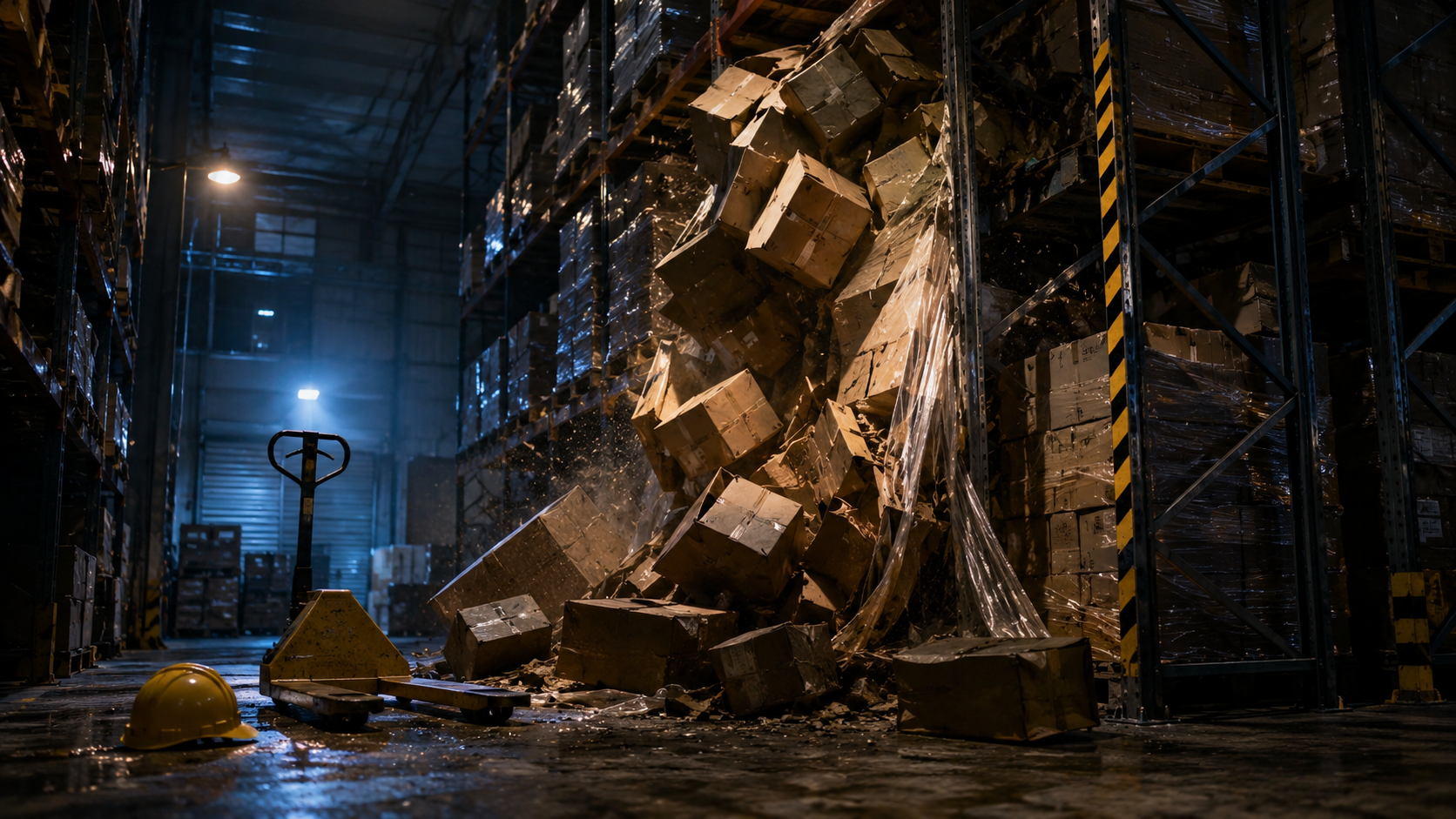
Questions About Falling Merchandise Injuries
These falling merchandise injury FAQs can help injured customers, workers, visitors, and families understand store responsibility, unsafe shelving, falling boxes, evidence, insurance issues, deadlines, and next steps after an injury in Texas.
Common Questions About Falling Merchandise Injuries in Texas
Use this FAQ as a starting point. These answers are general information, not legal advice, and the right next step can depend on where the injury happened, how the merchandise was stored, who controlled the area, available evidence, deadlines, and Texas law.
01-07
First Steps and Evidence After Falling Merchandise
01What is a falling merchandise injury?
A falling merchandise injury happens when products, boxes, displays, pallets, or store items fall and hurt a customer, worker, or visitor. These accidents often happen in grocery stores, big-box stores, warehouse clubs, hardware stores, retail stores, and storage areas.
02Can I sue a store if merchandise fell on me in Texas?
Possibly. A store may be responsible if unsafe shelving, poor stacking, overloaded displays, falling boxes, or careless employee conduct caused your injury. The key question is whether the store knew or should have known about the dangerous condition.
03What should I do after merchandise falls on me in a store?
Get medical care, report the incident to the store, ask for an incident report, take photos, get witness names, and save the item or product information if possible. Do not ignore pain, especially if you were hit on the head, neck, back, shoulder, or foot.
04Should I report a falling merchandise accident to the store manager?
Yes. Ask to make a written incident report before leaving the store if possible. Get the manager’s name and ask for a copy or confirmation that the report was made.
05Should I take photos after a falling merchandise injury?
Yes, if you can do so safely. Take photos of the item that fell, the shelf, display, aisle, warning signs, boxes, pallets, nearby merchandise, floor area, visible injuries, and anything else that shows how the accident happened.
06What information should I collect after a falling merchandise accident?
Try to collect the store name, location, date, time, manager’s name, employee names, witness names, photos, video information, incident report details, product information, and medical records.
07Should I ask the store to preserve video footage?
Yes. Many stores have surveillance cameras, but footage may be deleted or overwritten. An attorney can send a preservation letter asking the store to save video, incident reports, photos, and other evidence.
08-16
Stores, Displays, Employees, and Customers
08What types of stores have falling merchandise accidents?
These accidents can happen in grocery stores, warehouse clubs, home improvement stores, big-box retailers, department stores, furniture stores, auto parts stores, dollar stores, pharmacies, convenience stores, and storage warehouses.
09Can I sue a grocery store for falling merchandise?
Possibly. Grocery stores may be responsible if products were stacked unsafely, displays were unstable, shelves were overloaded, or employees failed to fix a known hazard.
10Can I sue a big-box store for falling boxes or products?
Possibly. Big-box stores often use tall shelves, heavy merchandise, overhead storage, pallets, and large displays. If unsafe storage or poor stocking caused your injury, a claim may be available.
11Can I sue a warehouse club for falling merchandise?
Yes, depending on the facts. Warehouse clubs often store heavy products on high shelves. If merchandise was stacked unsafely, loaded improperly, or knocked down because of store negligence, the store may be responsible.
12Can I sue a hardware store after lumber, tools, or equipment fell on me?
Possibly. Hardware and home improvement stores often sell heavy items such as lumber, pipes, tile, appliances, tools, doors, and building materials. These items must be stored and displayed safely.
13Can I sue a furniture store if furniture fell on me?
Possibly. Furniture stores may be responsible if shelves, displays, mattresses, cabinets, chairs, tables, or other furniture were not secured, stacked, or displayed safely.
14Can I sue if a store display collapsed on me?
Yes, depending on the facts. Stores must use reasonable care when creating displays. A display may be dangerous if it is unstable, overloaded, poorly assembled, placed in a crowded aisle, or not inspected.
15Can I sue if an employee knocked merchandise onto me?
Possibly. If a store employee dropped, pushed, pulled, lifted, or moved merchandise in a way that caused it to fall on you, the store may be responsible for the employee’s actions.
16Can I sue if another customer knocked merchandise onto me?
Possibly, but these cases can be more complicated. The store may still be responsible if the display or shelving was unsafe, the merchandise was poorly stacked, or the store should have anticipated the danger.
17-26
Overhead Storage, Pallets, Vendors, and Defects
17What if heavy items were stored on a high shelf?
Heavy items stored overhead can be dangerous if they are not secured, balanced, or properly placed. A store may be responsible if unsafe overhead storage caused an item to fall and injure someone.
18What if merchandise was stacked too high?
Merchandise stacked too high may become unstable and dangerous. If a store created or allowed unsafe stacking, it may be responsible for injuries caused by falling products.
19What if the shelf was overloaded?
An overloaded shelf can collapse, bend, or cause products to fall. Evidence may include photos, shelf condition, product weight, employee testimony, store policies, and video footage.
20What if the store failed to use safety restraints?
Some products need safety bars, straps, nets, guards, shrink wrap, or other restraints. If the store failed to secure merchandise properly, that may support a falling merchandise injury claim.
21What if an item fell from a pallet?
Falling pallet injuries can happen when products are stacked poorly, shrink wrap fails, forklifts move merchandise unsafely, or pallets are stored overhead. The store, warehouse operator, or another company may be responsible.
22What if a forklift caused merchandise to fall?
If a forklift operator hit shelving, moved a pallet unsafely, or dropped merchandise, the store or operator’s employer may be responsible. Forklift accidents can cause serious injuries.
23What if I was injured by falling merchandise in a parking lot or loading area?
A claim may be possible if a store, delivery company, vendor, or property owner failed to handle, stack, unload, or secure merchandise safely. Loading areas can involve delivery trucks, pallets, forklifts, and heavy products.
24What if a delivery worker caused merchandise to fall?
A delivery company, vendor, store, or driver may be responsible if unsafe unloading, stacking, or handling caused the merchandise to fall. These cases may involve more than one company.
25Can a vendor be responsible for falling merchandise?
Yes, depending on the facts. Vendors sometimes stock shelves, build displays, deliver products, or arrange merchandise. If a vendor’s negligence caused the item to fall, the vendor may be responsible.
26Can a product manufacturer be responsible for a falling merchandise injury?
Possibly. If the product packaging, display rack, shelf system, or safety restraint was defective, a manufacturer, distributor, or seller may be responsible.
27-33
Falling Merchandise Injuries
27What injuries are common after falling merchandise accidents?
Common injuries include concussions, traumatic brain injuries, neck injuries, back injuries, shoulder injuries, broken bones, cuts, bruises, eye injuries, foot injuries, nerve damage, spinal injuries, and emotional trauma.
28Can falling merchandise cause a concussion?
Yes. A product or box that strikes the head can cause a concussion or traumatic brain injury. Symptoms may include headaches, dizziness, confusion, nausea, memory problems, light sensitivity, and trouble concentrating.
29Can falling merchandise cause neck or back injuries?
Yes. Falling products can cause whiplash, herniated discs, muscle strains, nerve injuries, spinal injuries, or chronic pain. Medical records are important for proving these injuries.
30Can falling merchandise cause shoulder injuries?
Yes. A person may suffer a shoulder injury when an item hits the shoulder, forces the arm backward, or causes a person to twist or fall. These injuries may include rotator cuff tears, labral tears, fractures, or nerve damage.
31Can falling merchandise cause foot or ankle injuries?
Yes. Heavy items can crush the foot or ankle, causing fractures, sprains, nerve damage, bruising, or long-term pain. Shoes, photos, medical imaging, and witness statements may be important evidence.
32What if my symptoms appeared days after merchandise fell on me?
Delayed symptoms are common, especially with head, neck, back, shoulder, and soft tissue injuries. Get medical care as soon as symptoms appear and tell your doctor that merchandise fell on you.
33What if I had a pre-existing condition before the falling merchandise injury?
A pre-existing condition does not automatically prevent a claim. If the falling merchandise accident made an old injury worse or caused new symptoms, you may still have legal rights.
34-38
Damages, Medical Bills, and Lost Wages
34What damages can I recover after a falling merchandise injury in Texas?
Depending on the case, damages may include medical bills, future medical care, lost wages, loss of earning capacity, pain, mental anguish, physical impairment, disfigurement, and other legally recoverable losses.
35Can I recover medical bills after a falling merchandise injury?
Possibly. If the store or another responsible party caused your injury, you may be able to recover past medical bills and future medical expenses related to the accident.
36Can I recover lost wages after falling merchandise hits me?
Yes, if your injuries caused you to miss work, lose overtime, reduce your hours, or lose income. Pay stubs, tax records, employer letters, and medical restrictions can help prove lost wages.
37Can I recover future medical expenses after a falling merchandise accident?
Possibly. Serious injuries may require surgery, therapy, injections, pain management, medication, rehabilitation, or long-term care. Future medical expenses usually require medical support and documentation.
38Can I recover pain and suffering after a falling merchandise injury?
Possibly. Pain and suffering may include physical pain, emotional distress, anxiety, loss of enjoyment of life, and the daily impact of your injuries.
39-46
Proof, Fault, Insurance, and Settlements
39How do I prove a store was negligent?
Evidence may include photos, video footage, witness statements, incident reports, employee testimony, store policies, prior complaints, unsafe stacking, poor inspections, missing restraints, or proof that employees created the hazard.
40What if the store says it did not know the merchandise was dangerous?
The store may still be responsible if it created the unsafe condition or should have discovered it through reasonable inspections. These cases often depend on evidence about how the merchandise was stocked, displayed, or maintained.
41What if there were no warning signs?
Missing warning signs may support a claim if the danger was not obvious and the store failed to warn customers. However, warnings are not always enough if the merchandise was stored or displayed unsafely.
42What if the store blames me for touching the merchandise?
Do not accept blame without an investigation. Stores may blame customers, but the real issue may be unsafe stacking, poor shelving, unstable displays, heavy items stored overhead, or lack of warnings.
43What if I was partly at fault for the accident?
You may still have a claim depending on your percentage of fault. Texas proportionate responsibility rules may reduce or prevent recovery depending on how fault is assigned.
44How long do I have to file a falling merchandise injury lawsuit in Texas?
Many Texas personal injury claims must be filed within two years of the injury. Some cases may involve shorter deadlines or special notice rules, so it is important to speak with an attorney quickly.
45Should I talk to the store’s insurance company?
Be careful. The store’s insurance company does not represent you. Before giving a recorded statement, signing medical authorizations, or accepting a settlement, it is wise to speak with an attorney.
46Should I accept the first settlement offer from the store?
Be cautious. Early settlement offers may not include future medical care, lost income, ongoing pain, permanent impairment, or long-term complications. Once you sign a release, you may not be able to ask for more later.
47-50
Hiring a Lawyer and Free Consultations
47How much does it cost to hire the Law Office of Don McClure for a falling merchandise injury case?
The Law Office of Don McClure offers a free consultation. In many injury cases, there are no upfront attorney’s fees, and no attorney’s fees unless money is recovered for you. The exact fee terms are explained in the written agreement.
48What is a contingency fee in a falling merchandise injury case?
A contingency fee means the attorney’s fee is based on the recovery in your case. Instead of paying attorney’s fees upfront, the fee is paid from the settlement or verdict if money is recovered.
49What areas does the Law Office of Don McClure serve for falling merchandise injury cases?
The Law Office of Don McClure serves falling merchandise injury victims in Houston, Harris County, Greater Houston, and Southeast Texas, including Pasadena, Baytown, Deer Park, La Porte, Pearland, Friendswood, League City, Missouri City, Stafford, Katy, Tomball, Webster, and surrounding communities.
50Why choose the Law Office of Don McClure after a falling merchandise injury?
The Law Office of Don McClure helps injured people understand their rights after serious store accidents involving falling boxes, collapsing displays, unsafe shelves, overhead merchandise, warehouse club products, grocery store items, hardware store materials, and other retail hazards. The firm offers free consultations and handles many injury cases with no attorney’s fees unless money is recovered.
Still have questions after a falling merchandise injury?
A free consultation can help you understand what evidence to save, what store or company records may matter, and what next steps to consider after boxes, pallets, products, displays, or other merchandise fell and caused an injury.
This information is general and is not legal advice. Every falling merchandise injury case depends on its own facts, evidence, deadlines, insurance coverage, and applicable law.