
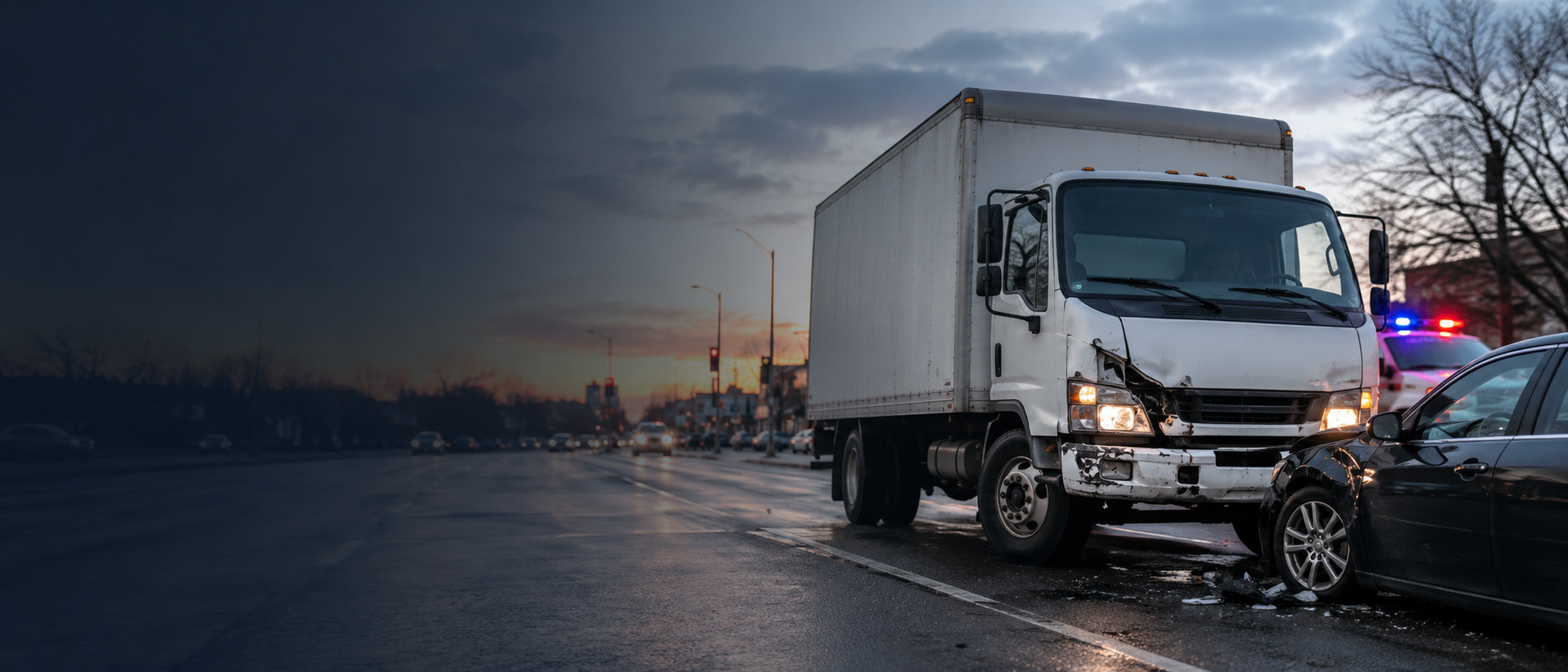
Questions About Delivery Truck Accidents
These delivery truck accident FAQs can help injured drivers, passengers, pedestrians, cyclists, and families understand insurance issues, company responsibility, evidence, deadlines, and next steps after a crash in Texas.
Common Questions About Delivery Truck Accidents in Texas
Use this FAQ as a starting point. These answers are general information, not legal advice, and the right next step can depend on the facts of the crash, the delivery company involved, the available evidence, insurance coverage, deadlines, and Texas law.
01-05
First Steps After a Delivery Truck Accident
01What should I do after a delivery truck accident in Texas?
Call 911, check for injuries, and get medical attention right away. If you can do so safely, take photos of the delivery truck, company logo, license plate, driver information, crash scene, vehicle damage, and your injuries. You should also get witness names and avoid discussing fault at the scene.
02Should I call the police after a delivery truck accident?
Yes. A police report can help document the crash, identify the driver, list insurance information, and preserve important facts. This is especially important when the accident involves a commercial delivery truck, company van, box truck, or courier vehicle.
03Should I go to the doctor after being hit by a delivery truck?
Yes. Delivery truck crashes can cause serious injuries, and symptoms may not appear right away. A medical evaluation helps protect your health and creates a record connecting your injuries to the accident.
04What information should I collect after a delivery truck crash?
Try to collect the driver’s name, employer or delivery company name, insurance information, license plate number, vehicle number, photos, witness information, police report number, and any visible company markings on the truck or van.
05What photos should I take after a delivery truck accident?
Take photos of the delivery truck, company logo, license plate, DOT number if visible, vehicle damage, road conditions, skid marks, traffic signs, intersection layout, packages or cargo, your injuries, and the surrounding crash scene.
06-16
Delivery Companies, Contractors, and Responsibility
06Why are delivery truck accident cases different from regular car accident cases?
Delivery truck accident cases may involve more than one responsible party. The driver, delivery company, vehicle owner, contractor, cargo company, maintenance provider, or insurance carrier may all need to be investigated.
07Who can be responsible for a delivery truck accident in Texas?
Possible responsible parties may include the delivery driver, delivery company, trucking company, courier company, vehicle owner, maintenance company, cargo loader, employer, contractor, or another negligent driver.
08Can I sue a delivery company after a crash?
Possibly. A delivery company may be responsible if its driver caused the crash while working, or if the company contributed to the accident through poor hiring, poor training, unsafe scheduling, bad maintenance, or pressure to make deliveries too quickly.
09Can the delivery driver be personally responsible for the accident?
Yes. A delivery driver may be responsible if the crash was caused by speeding, distraction, fatigue, unsafe turns, failure to yield, tailgating, illegal parking, or failure to watch for pedestrians, cyclists, or other drivers.
10Can a company be responsible if the delivery driver was an independent contractor?
Possibly. Companies may try to avoid responsibility by calling a driver an independent contractor. However, the facts matter. Control over the driver’s work, delivery schedule, app use, branding, vehicle requirements, and job duties may be important.
11What if the delivery truck driver was working for Amazon, UPS, FedEx, DHL, or another company?
A claim may be possible against the driver, delivery contractor, vehicle owner, or company connected to the delivery. These cases can be complicated because large delivery companies may use contractors, subcontractors, or third-party logistics providers.
12Can I bring a claim after being hit by an Amazon delivery driver?
Possibly. Amazon delivery cases may involve the driver, a delivery service partner, a vehicle owner, or another company. A lawyer can investigate who employed or controlled the driver and what insurance may apply.
13Can I bring a claim after being hit by a UPS delivery truck?
Possibly. If a UPS driver caused the accident while working, there may be a claim involving the driver, UPS, or applicable insurance coverage. Evidence should be preserved quickly.
14Can I bring a claim after being hit by a FedEx delivery truck?
Possibly. FedEx delivery cases may involve FedEx, a FedEx contractor, a driver, a vehicle owner, or another responsible party. The exact claim depends on who controlled the delivery work and vehicle.
15Can I bring a claim after being hit by a food delivery driver?
Yes, depending on the facts. Food delivery crashes may involve drivers working for restaurants, grocery services, delivery apps, or courier companies. Insurance coverage can be complicated in these cases.
16Can I bring a claim after being hit by an Instacart, DoorDash, Uber Eats, or grocery delivery driver?
Possibly. App-based delivery cases often require investigation into whether the driver was logged into the app, actively delivering, waiting for an order, or using the vehicle personally at the time of the crash.
17-23
Common Delivery Truck Crash Situations
17What if a delivery driver hit me while backing up?
Backing accidents can cause serious injuries, especially to pedestrians, cyclists, children, and people in parking lots. The driver may be responsible if they failed to check mirrors, use a spotter, look behind the vehicle, or back up safely.
18What if a delivery truck hit me in a parking lot?
Parking lot delivery truck accidents are common. A driver may be responsible for speeding, backing unsafely, failing to yield, cutting through parking spaces, blocking visibility, or failing to watch for pedestrians.
19What if a delivery truck hit me while making a turn?
Delivery trucks and vans can have wide turns and blind spots. A driver may be responsible for failing to signal, turning too wide, turning from the wrong lane, cutting off traffic, or failing to check for pedestrians and cyclists.
20What if a delivery truck hit me while parked illegally?
A delivery truck that is illegally or dangerously parked can create a hazard. If the truck blocked traffic, bike lanes, sidewalks, driveways, crosswalks, or sight lines, the driver or company may be responsible for resulting injuries.
21What if a delivery truck caused a crash without hitting my vehicle?
A claim may still be possible. If a delivery driver cut you off, forced you off the road, blocked a lane, dropped cargo, or caused another driver to swerve, the delivery driver or company may still be responsible.
22What if cargo or packages fell from a delivery truck?
Falling cargo can cause serious crashes and injuries. The driver, delivery company, loading company, vehicle owner, or maintenance provider may be responsible if packages, equipment, or cargo were not properly secured.
23What if poor delivery truck maintenance caused the accident?
If bad brakes, worn tires, broken lights, steering problems, or other mechanical failures caused the crash, the delivery company, vehicle owner, or maintenance provider may be responsible.
24-28
Distracted, Rushed, Tired, and Speeding Drivers
24What if the delivery driver was distracted?
Distracted driving is common in delivery work because drivers may use phones, GPS, scanners, apps, radios, or route systems. Cell phone records, app data, dash cameras, witness statements, and vehicle data may help prove distraction.
25What if the delivery driver was rushing?
Delivery pressure can contribute to unsafe driving. If a company pushed unrealistic schedules, tight delivery windows, unsafe routes, or productivity quotas, that may be important evidence in a delivery truck accident claim.
26What if the delivery driver was tired?
Fatigue can slow reaction time and cause dangerous mistakes. Delivery drivers may work long shifts, make repeated stops, lift heavy packages, and drive in heavy traffic. Fatigue may be part of the investigation.
27What if the delivery driver was speeding?
Speeding can make a delivery truck accident much more serious. Speed may be proven through witness statements, police reports, dash camera footage, GPS data, app data, black box data, or crash reconstruction.
28What if the delivery driver was texting or using an app?
Using a phone or delivery app while driving may be evidence of negligence. App activity, cell phone records, witness accounts, and dash camera video may help show whether distraction caused the crash.
29-33
Delivery Truck Accident Injuries
29What injuries are common in delivery truck accidents?
Common injuries include whiplash, neck injuries, back injuries, herniated discs, broken bones, concussions, traumatic brain injuries, shoulder injuries, knee injuries, internal injuries, crush injuries, burns, cuts, scarring, and emotional trauma.
30Can I bring a claim for a concussion after a delivery truck crash?
Possibly. A concussion can happen even without losing consciousness. Symptoms may include headaches, dizziness, confusion, nausea, memory problems, mood changes, light sensitivity, and trouble concentrating.
31Can I bring a claim for neck or back injuries after a delivery truck accident?
Yes, depending on the facts. Neck and back injuries may include whiplash, disc injuries, nerve damage, muscle strains, fractures, or chronic pain. Medical records are important for proving these injuries.
32What if my injuries showed up days after the delivery truck accident?
Delayed symptoms are common. Get medical care as soon as symptoms appear and tell your doctor that you were involved in a delivery truck accident. Waiting too long may give the insurance company an excuse to question your claim.
33What if I had a pre-existing condition before the delivery truck accident?
A pre-existing condition does not automatically prevent a claim. If the crash made an old injury worse or caused new symptoms, you may still have legal rights.
34-38
Damages, Lost Wages, and Property Damage
34What damages can I recover after a delivery truck accident in Texas?
Depending on the case, damages may include medical bills, future medical care, lost wages, loss of earning capacity, pain, mental anguish, physical impairment, disfigurement, property damage, and other legally recoverable losses.
35Can I recover lost wages after a delivery truck accident?
Possibly. If your injuries caused you to miss work, lose overtime, reduce your hours, or lose income, those losses may be part of your claim. Pay stubs, tax records, employer letters, and medical restrictions can help prove lost wages.
36Can I recover future medical expenses after a delivery truck crash?
Possibly. Serious injuries may require surgery, therapy, injections, medication, pain management, rehabilitation, counseling, or long-term care. Future medical costs usually require medical support and documentation.
37Can I recover pain and suffering after a delivery truck accident?
Possibly. Pain and suffering may include physical pain, emotional distress, anxiety, loss of enjoyment of life, and the daily impact of your injuries.
38What if my car was damaged in a delivery truck accident?
You may have a property damage claim for repair costs, replacement value, towing, storage, rental car expenses, and related losses. Keep repair estimates, photos, invoices, and insurance communications.
39-44
Deadlines, Fault, Insurance, and Settlements
39How long do I have to file a delivery truck accident lawsuit in Texas?
Many Texas personal injury claims must be filed within two years of the accident. Some cases may involve shorter deadlines or special notice rules, so it is important to speak with an attorney as soon as possible.
40What if I was partly at fault for the delivery truck accident?
You may still have a claim depending on your percentage of fault. Texas proportionate responsibility rules may reduce or prevent recovery depending on how fault is assigned.
41What if the delivery company blames me for the accident?
Do not accept blame without a full investigation. Delivery companies and insurers may try to shift responsibility. Photos, video, witness statements, police reports, vehicle data, GPS records, and app data may tell a different story.
42Should I accept the first settlement offer after a delivery truck accident?
Be careful. Early settlement offers may not include future medical care, lost income, permanent pain, disability, or long-term complications. Once you sign a release, you may not be able to ask for more later.
43Should I sign documents from the delivery company or insurance carrier?
Do not sign documents unless you understand what they do. Medical authorizations, releases, and settlement paperwork may affect your privacy and your legal rights.
44How much is my delivery truck accident case worth?
The value depends on the severity of your injuries, medical bills, future treatment, lost income, pain, impairment, fault, insurance coverage, and available evidence. No attorney should promise a specific result without reviewing the facts.
45-50
Hiring a Lawyer and Free Consultations
45What does a delivery truck accident lawyer do?
A lawyer investigates the crash, identifies responsible parties, preserves evidence, communicates with insurance companies, reviews medical records, calculates damages, negotiates settlement, and files a lawsuit when necessary.
46How much does it cost to hire the Law Office of Don McClure for a delivery truck accident case?
The Law Office of Don McClure offers a free consultation. In many injury cases, there are no upfront attorney’s fees, and no attorney’s fees unless money is recovered for you. The exact fee terms are explained in the written agreement.
47What is a contingency fee in a Texas delivery truck accident case?
A contingency fee means the attorney’s fee is based on the recovery in your case. Instead of paying attorney’s fees upfront, the fee is paid from the settlement or verdict if money is recovered.
48Do I pay attorney’s fees if my delivery truck accident case does not recover money?
In many contingency fee cases, there are no attorney’s fees unless money is recovered. The written fee agreement should explain attorney’s fees, case expenses, and how costs are handled.
49What areas does the Law Office of Don McClure serve for delivery truck accident cases?
The Law Office of Don McClure serves delivery truck accident victims in Houston, Harris County, Greater Houston, and Southeast Texas, including Pasadena, Baytown, Deer Park, La Porte, Pearland, Friendswood, League City, Missouri City, Stafford, Katy, Tomball, Webster, and surrounding communities.
50Why choose the Law Office of Don McClure after a delivery truck accident?
The Law Office of Don McClure helps injured people understand their rights after crashes involving delivery trucks, company vans, courier vehicles, box trucks, Amazon drivers, UPS trucks, FedEx trucks, grocery delivery drivers, and other commercial vehicles. The firm offers free consultations and handles many injury cases with no attorney’s fees unless money is recovered.
Still have questions after a delivery truck accident?
A free consultation can help you understand what information to save, what companies may need to be reviewed, and what next steps to consider after a crash involving a delivery truck, company van, courier vehicle, or box truck.
This information is general and is not legal advice. Every delivery truck accident case depends on its own facts, evidence, deadlines, insurance coverage, and applicable law.