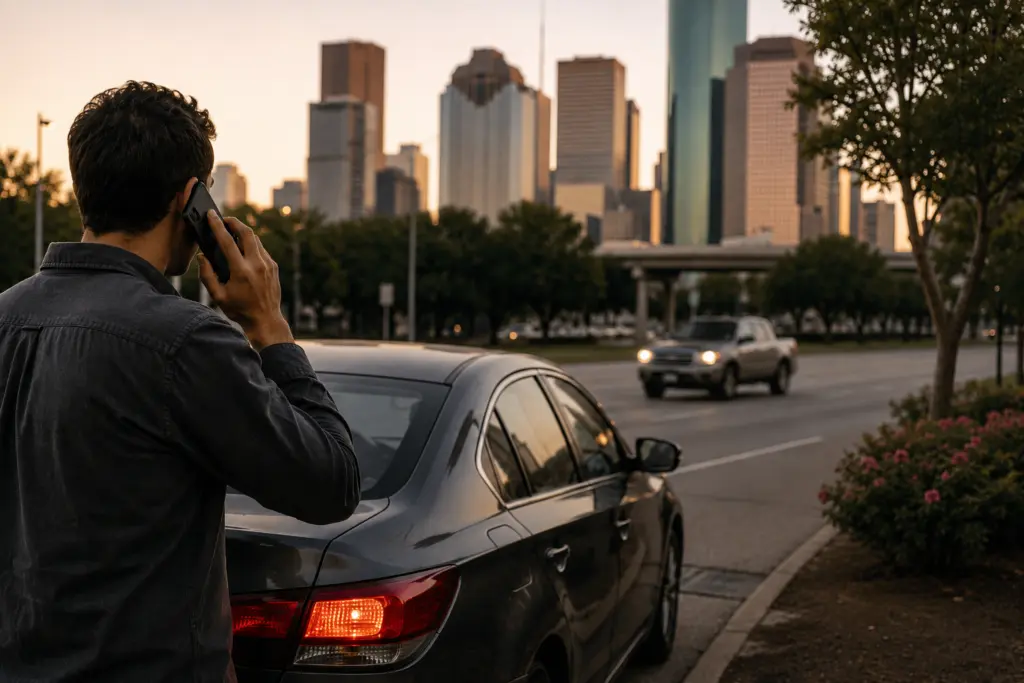
Houston Hit and Run Accidents
Hit and Run Accident Houston: What Are Your Options?
Someone hit you and drove away. Here is what you may still be able to do.
A hit and run accident Houston crash can happen in seconds.
```You are driving through Houston traffic, waiting at a light, crossing an intersection, or pulling out of a parking lot. Another vehicle hits you. Before you can process what happened, the other driver leaves.
No insurance information. No apology. No explanation.
Just damage, pain, confusion, and a lot of questions.
```A hit and run accident Houston case can feel unfair because the person who caused the crash disappeared. But that does not always mean you are out of options. In Houston and across Texas, certain steps can help you protect your health, document what happened, and understand whether your insurance policy or a legal claim may help. The Law Office of Don McClure helps injured Texans understand their legal options after serious car accidents, truck accidents, pedestrian accidents, and hit and run crashes.
Quick Answer: What Can You Do After a Hit and Run Accident in Houston?
```After a hit and run accident in Houston, call 911, get medical care, document the scene, look for witnesses or nearby cameras, notify your insurance company, and avoid guessing about what happened.
Depending on the facts, you may have a claim against the driver if police find them. Your own policy may also provide uninsured motorist coverage, property damage coverage, medical payments coverage, or other benefits.
Every case is different. Your options depend on the evidence, your injuries, your insurance coverage, and whether police can find the driver who left.
```How Common Are Hit and Run Accidents in Houston?
Houston sees a high number of crashes every year. Hit and run cases can feel even harder because the injured person may not know who caused the crash.
According to Texas Department of Transportation 2024 crash data, Houston had more than 66,000 total crashes in 2024.
```ABC13 Houston reported, based on Houston Police Department data, that drivers report thousands of hit and run cases in Houston and police clear only a small percentage.
Sources: TxDOT crash records and ABC13 Houston reporting on HPD hit and run data.
```Is It Illegal to Leave the Scene of an Accident in Texas?
Yes. Texas law requires drivers involved in certain crashes to stop, provide information, and render aid when required. Under Texas Transportation Code Section 550.021, a driver involved in a crash that results or is reasonably likely to result in injury or death must stop at the scene or as close as possible.
Texas law also requires drivers to provide certain information and reasonable assistance when required. Those duties appear in Texas Transportation Code Section 550.023.
For an injured person, the legal violation is only part of the story. The more urgent question is usually: how do I protect myself after the other driver leaves?
What Happens to the Driver if Police Catch Them?
It depends on the facts and the seriousness of the crash. Texas law treats leaving the scene of a crash involving injury or death seriously.
- If the crash involved only vehicle damage, Texas law may treat the offense as a misdemeanor depending on the amount of damage.
- If someone suffered injuries, the driver may face more serious penalties.
- If someone suffered serious bodily injury or died, prosecutors may file felony charges.
But here is the part many people do not realize: a criminal case and an injury claim are not the same thing. Even if the driver receives a ticket, gets arrested, or faces prosecution, that does not automatically pay medical bills, repair the car, or replace lost income.
What If Police Never Find the Driver?
This is one of the hardest parts of a hit and run case. Police may find the driver through witness statements, camera footage, license plate information, vehicle parts, or insurance records. In some cases, they may never find the driver.
If police cannot identify the driver, your own insurance coverage may become important. Depending on your policy, possible options may include:
- Uninsured motorist coverage
- Personal injury protection
- Medical payments coverage
- Collision coverage
- Health insurance for medical treatment
The Texas Department of Insurance explains uninsured and underinsured motorist coverage as coverage that may help when you are in a hit and run accident and the other driver cannot be found to pay for damage.
What Is Uninsured Motorist Coverage?
Uninsured motorist coverage is often called UM coverage. In simple terms, it may help when the at-fault driver has no insurance or when police cannot identify the driver, depending on the policy and facts.
In a Houston hit and run case, UM coverage may help with losses such as:
- Medical bills
- Lost income
- Pain and suffering
- Other losses depending on the policy and case
Insurance coverage can be technical. The insurance company may ask for notice, records, proof, or other documents. It may also review whether the crash qualifies under the policy.
What If Police Find the Driver, But the Driver Has Little or No Insurance?
If police find the hit and run driver, you may have a claim against that driver, depending on the facts. If the driver has no insurance or not enough insurance, your own policy may still matter.
Underinsured motorist coverage, often called UIM coverage, may help when the at-fault driver has insurance, but the available coverage is not enough to address the losses. Whether UIM applies depends on the policy, the claim, and the facts.
What Should You Do Right After a Hit and Run?
- Call 911 right away. A police report can help show that the other driver left the scene.
- Get medical care, even if you feel okay at first. Some injuries take hours or days to become clear.
- Write down what you remember about the vehicle, including color, make, model, damage, and any part of the license plate.
- Look for cameras nearby. Businesses, homes, apartments, dashcams, and parking lots may have useful footage.
- Notify your insurance company carefully. Stick to facts you know and avoid guessing.
- Keep everything. Save the police report number, photos, repair estimates, medical bills, and insurance letters.
What If the Insurance Company Blames You?
Insurance companies may still question a hit and run claim. They may ask whether another car caused the crash, whether you reported it quickly, whether the damage matches your account, whether your injuries are related, or whether you share fault.
This can feel frustrating, especially when the other driver left. But it also shows why records matter. Photos, police reports, medical records, witness information, repair estimates, and video footage can help support what happened.
How Long Do You Have to Take Action in Texas?
Texas has legal deadlines. Under Texas Civil Practice and Remedies Code Section 16.003, many personal injury lawsuits generally must be filed within two years.
However, deadlines can vary depending on the facts. Insurance policies may also have notice requirements that come much sooner. Claims involving government entities, minors, uninsured motorist coverage, or other special circumstances may have different timing issues.
What Should You Avoid After a Hit and Run Accident?
After a hit and run, emotions are high. That is normal. But a few choices can make the claim harder later.
- Do not chase the driver who left.
- Do not post details about the crash online.
- Do not guess about facts you do not know.
- Do not say you are fine if you are in pain.
- Do not delay medical care.
- Do not throw away damaged parts, repair records, bills, or insurance letters.
- Do not accept a quick settlement before understanding your injuries and coverage.
How the Law Office of Don McClure Can Help
Hit and run accidents can leave injured people feeling stuck. You may not have a driver at the scene. The insurance company may ask difficult questions. Medical bills may start arriving. The police investigation may take time. You may also wonder which coverage applies.
Depending on the facts, legal help may include:
- Reviewing the police report
- Looking for possible sources of video
- Identifying witnesses
- Reviewing insurance policies
- Evaluating uninsured motorist coverage
- Communicating with insurance companies
- Documenting injuries and medical treatment
- Investigating whether police can identify the driver who left
FAQs About Hit and Run Accidents in Houston
```Call 911, get medical care if needed, document the scene, look for witnesses or cameras, and notify your insurance company. Avoid guessing about details you do not know.
Possibly. Your own insurance policy may include uninsured motorist coverage, personal injury protection, medical payments coverage, or collision coverage that may help depending on the policy and facts.
It may apply depending on the policy and facts. The insurance company may ask for records, police reporting, and proof that another vehicle caused the crash.
If police find the driver, you may have a claim against that driver and potentially other responsible parties depending on vehicle ownership, employment status, insurance coverage, and the facts of the crash.
Many personal injury lawsuits in Texas generally have a two-year deadline, but insurance notice requirements and special circumstances may create different timing issues. It is important to act early.
Final Thoughts
A hit and run accident in Houston can leave you feeling like the person who caused the crash took away your answers. But you may still have options.
Police may find the driver. A witness may come forward. A nearby camera may have captured the vehicle. Your own insurance policy may provide coverage. Another responsible party may be involved.
The most important thing is to protect your health, document what you can, and understand your options before making decisions that could affect your claim.
Questions After a Hit and Run Accident in Houston?
The Law Office of Don McClure offers a free initial case review. You can discuss your situation, learn your options, and decide what steps may make sense for your case.
Contact UsExternal Sources
This article is for informational purposes only and does not constitute legal advice. Reading this article does not create an attorney-client relationship. Every case is unique, and past results do not guarantee future outcomes.